
Call Prakash Acharya
Call Amrit Lamsal



The choice between a fixed and variable interest rate is one of the most crucial decisions when applying for a home loan in Melbourne. Both alternatives have advantages and disadvantages, and this decision will directly impact your repayments, flexibility, and how you respond to any fluctuations in the Reserve Bank of Australia’s (RBA) cash rate.
At Capkon Melbourne, we help borrowers understand these differences so they can make smarter financial decisions. Let’s break down how fixed vs variable rate mortgages work and how interest rate movements can shape your loan.
What Is a Fixed Rate Mortgage?
A fixed-rate mortgage entails the interest rate being fixed over a given duration, normally one to five years. Under this term, you will not experience any variations when it comes to repayments, irrespective of what the RBA does to the official cash rate.
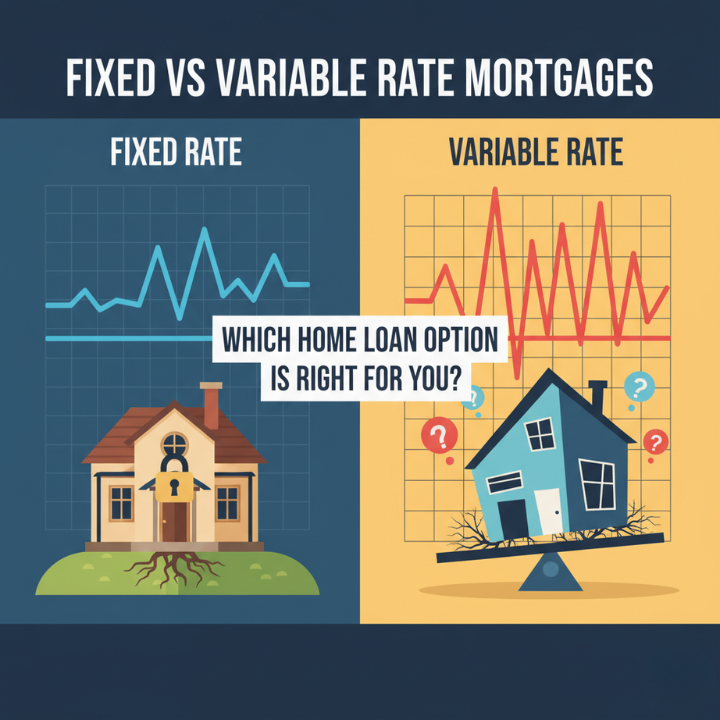
Advantages: The main advantage is the certainty of repayment, which enables a significant increase in budget stability. You are in full control of the amount you have to pay monthly, and therefore, financial planning is not difficult.
Disadvantages: Fixed rates are less flexible. You will also be required to pay very high break fees in case you attempt to repay the loan early or change to a variable rate before the specified fixed term elapses.
What Is a Variable Rate Mortgage?
A variable rate home loan is that in which the interest rate may vary over the lifetime of the loan. This is directly affected by general market conditions and fluctuations in the RBA cash rate. When the RBA increases the cash rate, it is most likely that your repayments will increase; when the RBA decreases the cash rate, then your repayments are more likely to decrease.
Advantages: There is more flexibility in repaying the loans and you could benefit of benefiting on the reduction of rates. You can also repay the loan at any extra repayment option unlimited without a charge, which hastens your loan repayment in most variable loans.
Disadvantages: Its primary issue is that repayment can be huge when the interest rates go up, and, hence, it may be uncertain and a possible burden to your family’s finances.
Key Differences Between Fixed and Variable Rate Mortgages
To help you compare the two options, here is a breakdown of the key features of a fixed-rate mortgage vs a variable-rate mortgage:
| Feature | Fixed Rate | Variable Rate |
| Repayment certainty | High | Low |
| Flexibility | Low | High |
| Benefit from rate cuts | No | Yes |
| Break fees | Often high | Usually lower |
How Do Interest Rate Changes Influence Your Loan?
Variable-rate loans are directly and instantaneously affected by the decisions made by the RBA as well as the overall market conditions. As the RBA makes changes in the official cash rate, the lenders usually transfer the entire change (or a part of it) to the variable rate borrowers, and this directly reflects in the way they are to make their monthly repayments.
Fixed loans are a way of protection where the fixed term is an insurance against an increase in rates. Nevertheless, this is a two-edged sword because you also fail to get rate cuts at the same time.
Example: Consider a $600,000 mortgage. If the RBA lifts rates by 0.25%:
- Variable Rate Mortgage: The interest rate increases by 0.25%, leading to a direct rise in your monthly repayment (potentially costing hundreds of extra dollars per month).
- Fixed Rate Mortgage: Your repayment remains unchanged for the fixed term.
When to Consider a Fixed Rate Mortgage
A fixed rate is best for borrowers who prioritise stability in repayments and value the peace of mind that comes with knowing their exact future expenses. It is particularly useful for:
- First-home buyers who are managing tight or constrained budgets.
- Borrowers who anticipate or want to hedge against a period of rising or volatile interest rates.
When to Consider a Variable Rate Mortgage
A variable rate is ideal for borrowers who want flexibility and have the financial capacity to handle repayment fluctuations. It is suitable for those:
- Planning to make extra repayments or pay off their loan faster.
- Intending to refinance soon or potentially sell the property in the near future.
- Believe the RBA is entering a declining interest rate environment.
Is a Split Loan the Best of Both Worlds?
A split mortgage allows you to divide your home loan into two portions: one part on a fixed rate and the other on a variable rate. This structure gives you the potential benefits of both options.
Benefits: You achieve repayment certainty on the fixed portion, protecting a part of your budget from rate hikes, while retaining the flexibility and potential for savings on the variable portion.
Example: If you have a $500,000 loan, you could choose to fix 50% ($250,000) of the loan while keeping the remaining 50% ($250,000) variable.
How Capkon Melbourne Helps You Choose the Right Mortgage
The choice between fixed, variable, or split is complex and depends entirely on your financial goals, risk appetite, and current market outlook.
At Capkon Melbourne, we are expert mortgage brokers in Melbourne who don’t just compare lenders and products; we provide strategic guidance on whether fixed, variable, or split suits your goals. We offer ongoing support to adjust your loan and strategy as interest rates shift over time.
Long-Term Costs: Fixed vs. Variable Rate Mortgages
When deciding between fixed and variable rates, one should look beyond the monthly payment and look at the total cost of the loan over the complete term. Although a fixed rate is protective, it might be pegged marginally above the variable rate when it is locked. In the long term, it has been found that it is hard to know which one will be cheaper, which is determined by the extent and time of the future RBA rate changes. Your need to have certainty, as opposed to flexibility, should drive the decision.
Should You Fix or Stay Variable in 2025?
The present perspective of 2025 is that there is a debate about interest rate trends in Australia. Some analysts indicate that the rates will remain stable, and others that they may continue moving.
In conclusion, it is always up to you to repair or maintain a variable, depending on your own situation, finances and risk-taking capacity. It does not have a universal right answer.
Arrange a consultation with Capkon Melbourne and see which alternative is the most beneficial in terms of individual financial needs and objectives.
FAQ related to Fixed vs Variable Rate Mortgages
What is the difference between fixed and variable rate mortgages?
A fixed-rate mortgage locks in your interest rate for a set term (e.g., 3 years), guaranteeing consistent repayments. A variable rate mortgage fluctuates with market conditions and RBA cash rate changes, meaning your repayments can go up or down.
Which is cheaper in the long run: fixed or variable mortgage rates?
There is no definitive answer. Historically, it is a coin flip. If interest rates rise significantly, fixed is cheaper. If they fall or remain stable, variables are often cheaper.
Which is better during inflation, fixed or variable rates?
When inflation is high, the RBA typically raises rates to cool the economy. In this environment, a fixed rate is generally better as it protects you from the likely rise in your repayment costs.
How do fixed vs variable mortgages affect first-home buyers?
First-home buyers often benefit from fixed rates due to the certainty they offer for budgeting, especially when managing tight finances for the first few years of homeownership.
Which is better in 2025/26 fixed or variable?
The optimal choice depends on the RBA’s future actions and your personal risk tolerance. If you believe rates have peaked, a variable or split loan may offer better flexibility. Consult with a Capkon Melbourne broker for an up-to-date outlook.
Can I change from fixed to variable during my loan term?
Only if you are willing to pay a substantial break fee (also known as an early exit fee), which can be thousands of dollars. It is usually best to wait until the fixed term expires.
What happens if I break a fixed-rate loan early?
You will incur a break fee, which is a charge designed to compensate the lender for the loss they incur by having to prematurely end your fixed-rate contract.
Is a split loan a good idea for first-home buyers?
Yes, a split loan can be an excellent option for first-home buyers. It offers the best of both worlds: stability on the fixed portion (helping with budgeting) and flexibility on the variable portion (allowing extra repayments).
How do rising interest rates affect my repayments?
If you have a variable rate, rising rates directly increase your monthly repayments. If you have a fixed rate, your repayments will only be affected once the fixed term expires.
Does Capkon Melbourne help with refinancing?
Yes, Capkon Melbourne specialises in refinancing. We help you compare hundreds of home loan products to ensure you have the most competitive rate and features for your current financial needs.
Do you need any Assistance in your loan?
We are here to help you.